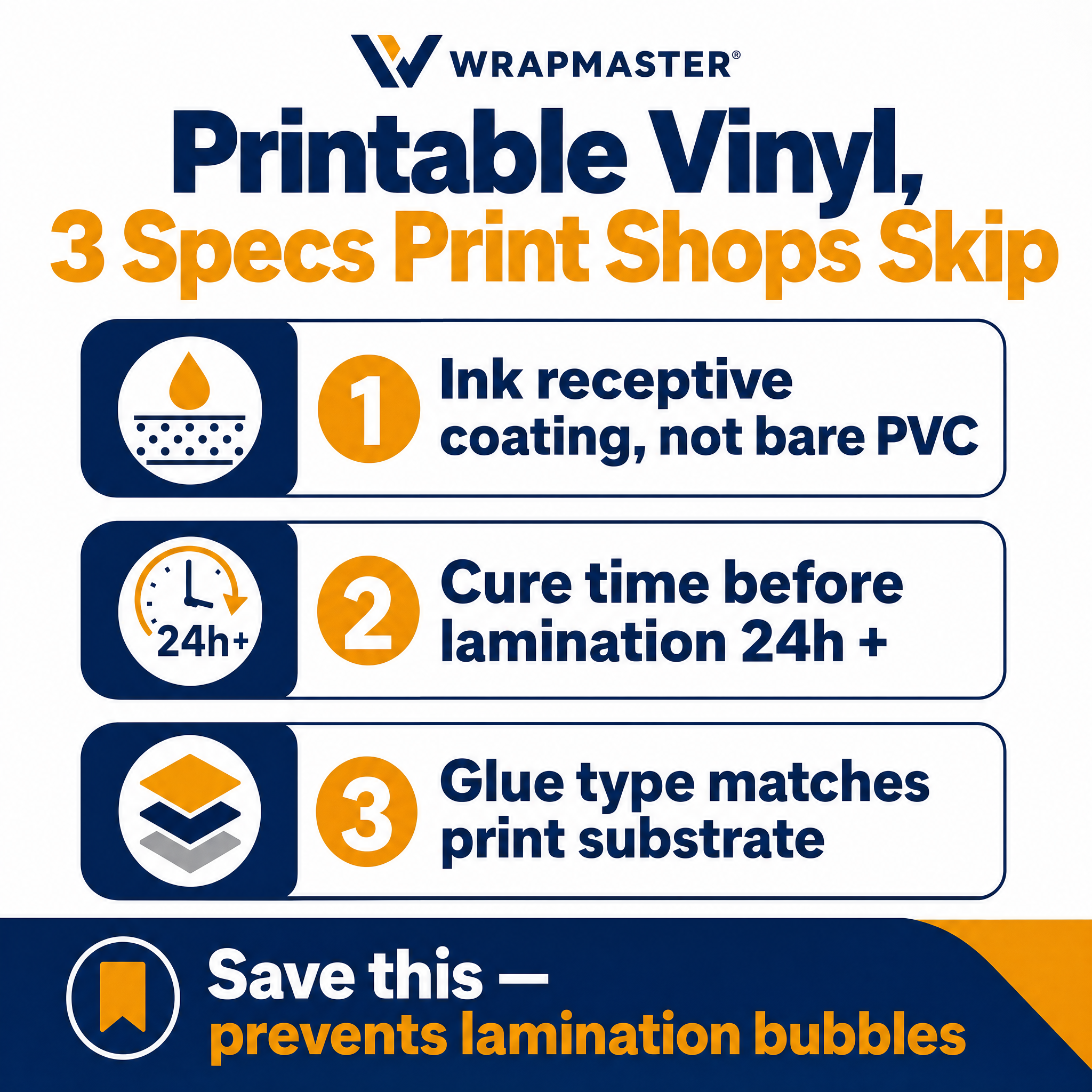
The short answer. Inkjet vinyl bubbles during lamination when the ink coating is still releasing solvent vapour, the adhesive backing is not suited to the substrate, or the lamination temperature is wrong. Three specs predict prints that laminate clean, one, ink receptive coating with proper outgassing time (24 to 48 hours), two, the right glue backing for the application (white glue for retail, black glue for blockout, grey glue for fleet trucks), three, printer type matched to the film (eco solvent, latex, or UV cure). Our Printable Vinyl range covers all three glue types for inkjet printers and UV printers.
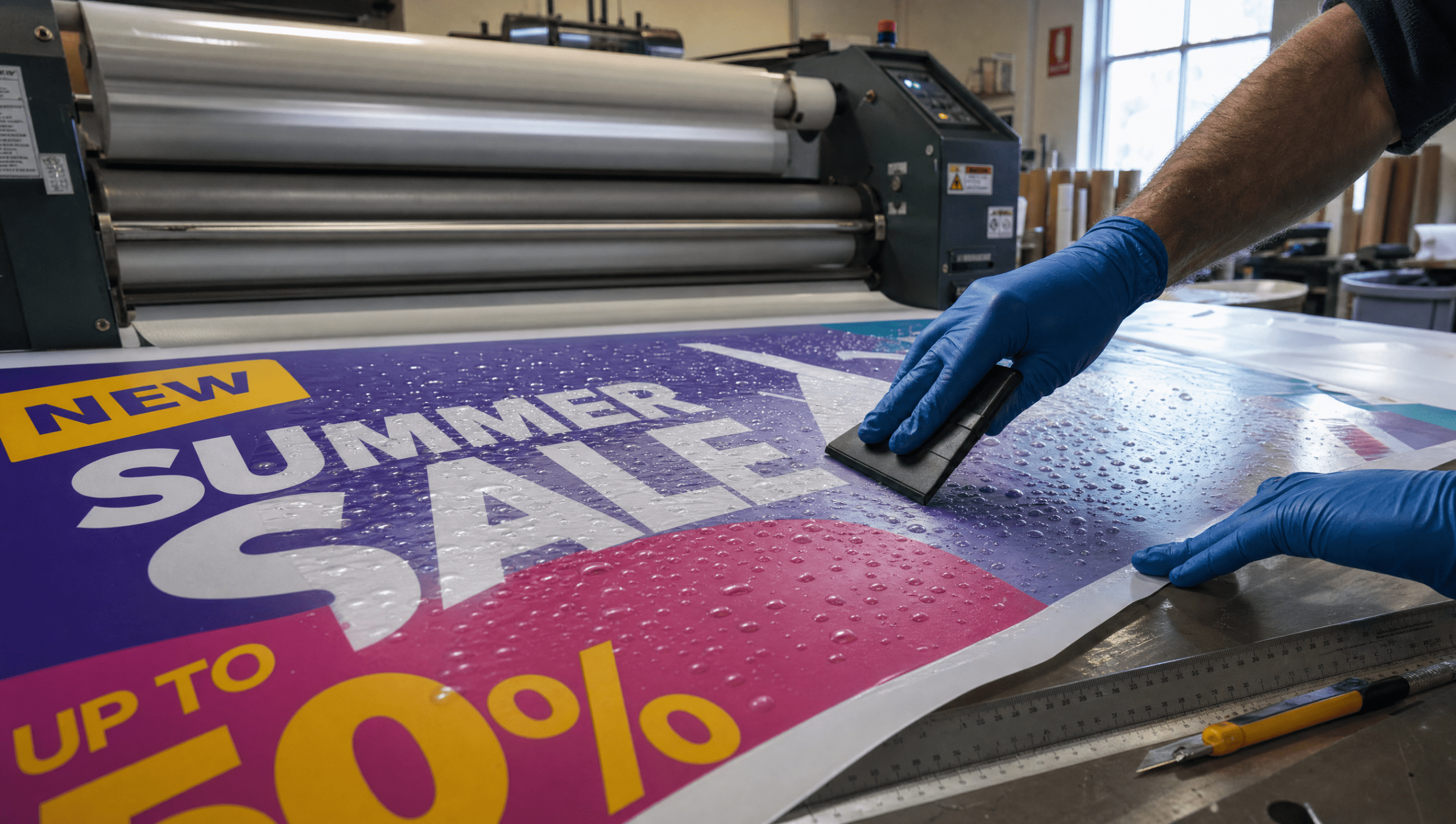
Your print shop just ran a 30 metre full bus side wrap. The print looked perfect off the printer. You laid the laminate over it. Halfway through the panel, bubbles started appearing. Now you have 30 metres of bubbled print sitting on the table and the customer wants it picked up tomorrow.
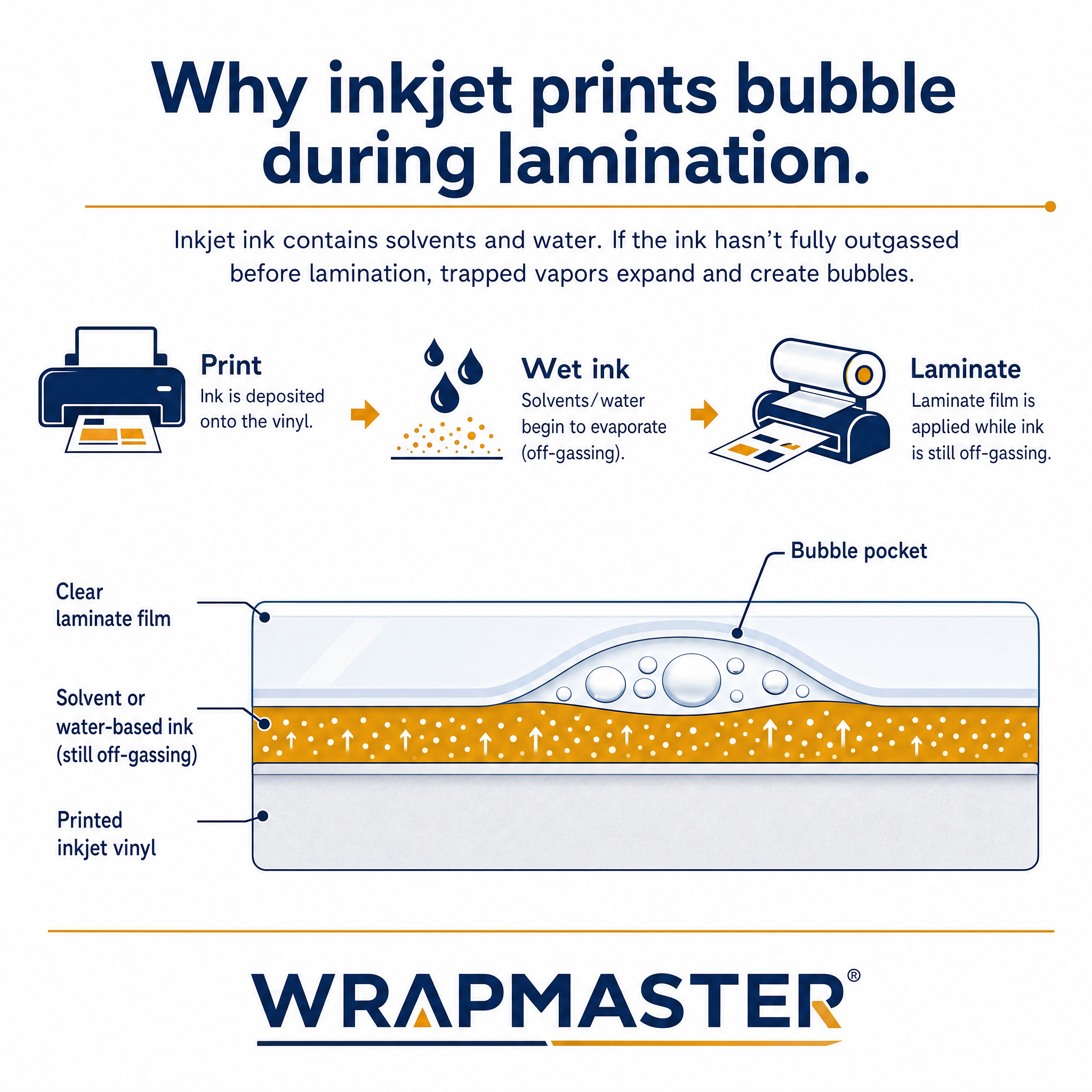
Lamination bubbles are not a printer problem and not a laminator problem. They are a chemistry timing problem. The ink is still releasing solvent vapour into the film, and when you trap it under laminate, the vapour has nowhere to go. The bubbles form, dry, and lock in place.
Three specs predict whether a printable vinyl will laminate clean, and they have nothing to do with the printer brand or the laminator brand. The rest of this article walks through them, and points to the right products in our Printable Vinyl range.
Why Inkjet Vinyl Bubbles During Lamination
Three causes. Each has a specific fix.
Outgassing trap. Eco solvent ink and latex ink both release vapour for 24 to 48 hours after printing. If you laminate too soon, the vapour escapes upward into the laminate film and forms bubbles. Fix, wait 24 to 48 hours after printing before laminating. Faster lamination is only safe with UV cure ink (no outgassing).
Wrong ink coating. Cheap printable vinyl uses a thin ink receptive coating that releases solvent unevenly. Premium printable vinyl uses a thicker engineered coating that releases vapour evenly and absorbs ink consistently. The cheap film bubbles even with 48 hour outgassing.
Adhesive backing mismatch. White glue, black glue, and grey glue are not just cosmetic. The colour relates to opacity and block out properties. Using grey glue when you need white glue (or vice versa) causes ghost images, see-through, or in extreme cases adhesive failure under heat.
The fix is not “wait longer.” The fix is selecting the right printable vinyl for the print conditions and lamination workflow.
The 3 Specs That Predict Lamination Success
Spec 1, Ink Receptive Coating Quality (Eco Solvent, Latex, UV Compatible)
Premium printable vinyl publishes which inks the film is compatible with.
- Eco solvent compatible only. Older film coating, works with Roland, Mimaki, Mutoh eco solvent printers. Does not always work with latex or UV.
- Eco solvent + latex compatible. Standard premium coating. Most printers covered.
- Eco solvent + latex + UV compatible. Top tier coating, accepts all three ink types. Required for shops running multiple printer types.
If a printable vinyl spec sheet does not list compatible ink types, the coating is probably eco solvent only and may bubble with latex or UV ink.
Spec 2, Adhesive Backing (White, Black, or Grey Glue)
The colour of the adhesive backing determines two things, the opacity / block out of the print, and the visual through the film if it lifts.
White glue printable vinyl. Used for retail window decals, light coloured backgrounds, posters that want a bright clean print look. The white adhesive prevents the substrate colour from showing through. Most common in the WRAPMASTER Printable Vinyl range for bus advertising.
Black glue inkjet printable vinyl. Used for blockout applications, dark backgrounds, signs that go on coloured or dirty substrates. The black adhesive prevents any colour transmission through the film. Essential for billboard installs and dark vehicle wraps.
Grey glue printable vinyl. Used specifically for commercial truck wraps and fleet vehicle applications. Grey adhesive blocks out the vehicle paint colour without affecting the printed colour. Compromise between white (cleaner colour) and black (full blockout).
Spec 3, Lamination Compatibility (Cold Laminate vs Heat Laminate)
Different printable films are engineered for different laminator types.
- Cold pressure laminate compatible. Most flexible, can be laminated at room temperature with low pressure. Required for thin film and short outgassing times.
- Heat laminate compatible (60 to 80°C). Stronger bond between print and laminate. Used for outdoor signs and vehicle wraps. Requires film that can survive the heat without deforming.
- Both. Premium printable vinyl accepts both methods. Gives the print shop flexibility.
Which Printable Vinyl In Our Range For Which Print Job
Our Printable Vinyl category carries three glue backings, each tuned to a specific application. All three are compatible with eco solvent ink and UV ink. Roll widths from 1.07m to 1.52m, lengths 50m standard.
| Product | Glue type | Best for |
|---|---|---|
| White Glue Printable Vinyl | White adhesive | Bus advertising, retail window posters, light background prints, high clarity colour reproduction |
| Black Glue Inkjet Printable Vinyl | Black adhesive | Billboards, dark substrates, blockout applications, dark vehicle wraps |
| Grey Glue Printable Vinyl | Grey adhesive | Commercial truck wraps, fleet vehicles, balanced blockout without colour shift |
Application match up
- Bus side advertising. White glue. Bright print, clean colour.
- Truck and van fleet wraps. Grey glue. Hides the vehicle paint underneath without affecting print colour.
- Billboard production. Black glue. Full blockout, no light bleed through.
- Vehicle hood prints on dark cars. Black glue. Prevents the paint colour from muting the print.
- Window cling decals on glass. White glue. Clean appearance from both sides.
- Wall murals indoors. White glue, cold laminate compatible film.
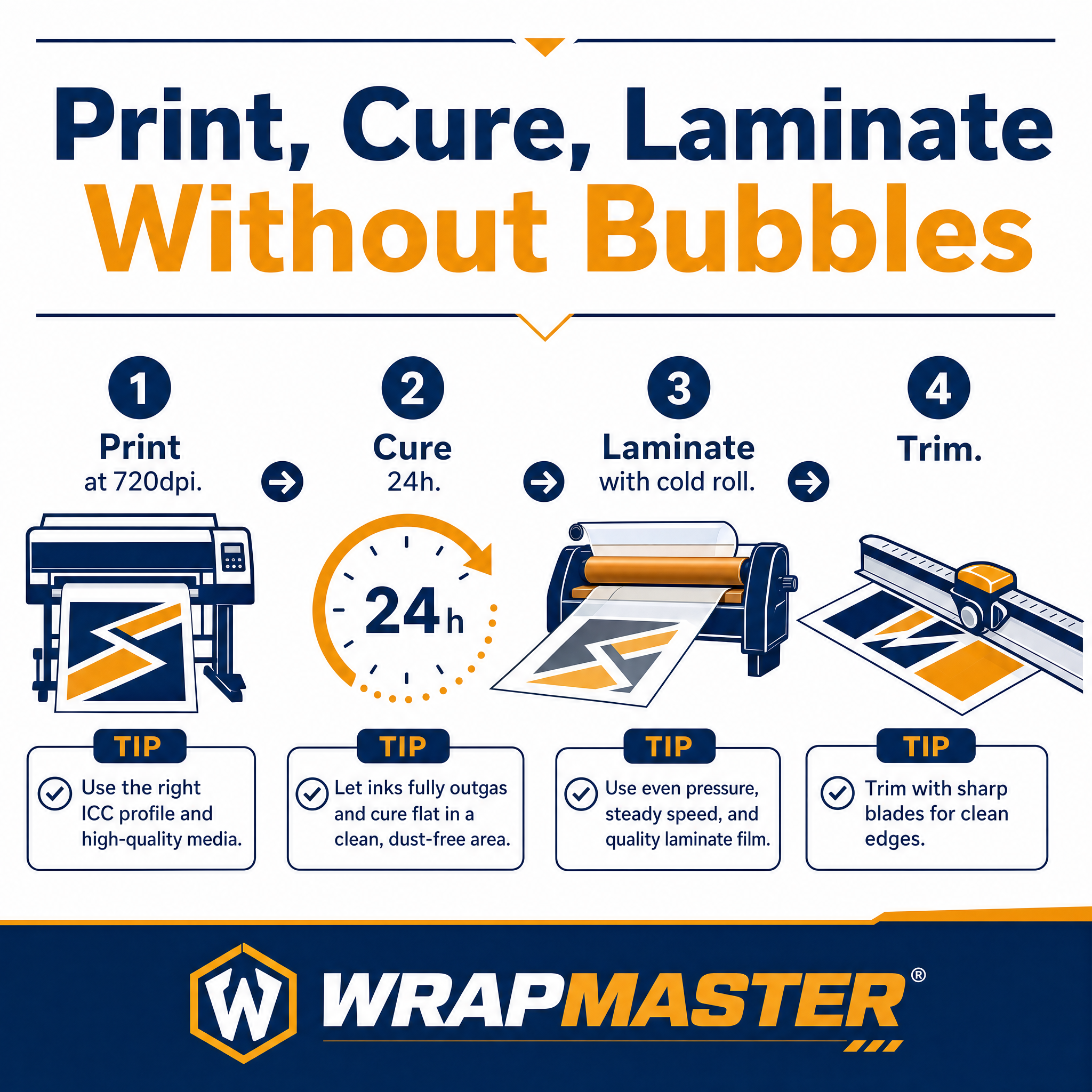
How to Print and Laminate Without Bubbling (Workflow)
Three rules for a clean lamination every time.
One, outgassing time per ink type.
- UV cure ink, laminate immediately if needed. No outgassing required.
- Latex ink, outgas 4 to 8 hours minimum.
- Eco solvent ink, outgas 24 to 48 hours minimum. Longer in humid climates.
Two, lamination environment. Aim for 18 to 25°C ambient temperature and 40 to 60% relative humidity. Cold rooms slow the adhesive cure. Hot rooms speed it too much. High humidity traps moisture.
Three, lamination speed and pressure. Cold laminate at 0.5 to 1 m/min, even pressure. Heat laminate at 60 to 80°C, 1 to 2 m/min, even pressure. Too fast traps air. Too slow over heats the film.
How Each Customer Pain Maps to a Specific Product
Print shop running eco solvent on a Roland, bus ad clients. White glue, eco solvent compatible. → White Glue Printable Vinyl.
Sign shop doing dark vehicle wraps. Black glue for blockout. → Black Glue Inkjet Printable Vinyl.
Fleet wrap business doing trucks and vans. Grey glue, balanced blockout. → Grey Glue Printable Vinyl. Volume default for commercial fleet print work.
Multi printer shop with eco solvent and UV printers. Premium coating compatible with both. → Full Printable Vinyl range, specify multi ink compatibility on the order.
Print shop scaling and needs catalogue for buyer reference. Download the full Printable Vinyl catalogue from the contact form.
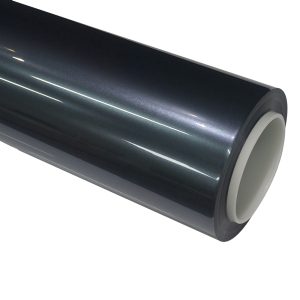
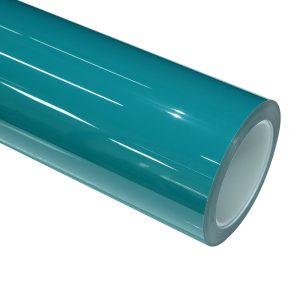
Our Printable Vinyl Range
Real specs, full warranty, every SKU on the page.

Frequently Asked Questions
How long do I need to outgas eco solvent prints before laminating?
24 to 48 hours minimum. Outgassing time increases in humid climates. UV cure ink does not require outgassing because it cures fully during printing.
Why is the adhesive backing colour important on printable vinyl?
The colour determines opacity through the film. White glue prevents substrate colour from showing through, black glue provides full blockout for billboards, grey glue is the standard for fleet trucks where you want to hide vehicle paint without affecting print colours.
Can I laminate printable vinyl with cold pressure or do I need heat?
Both work depending on the film grade. Cold laminate is faster and safer for thin film. Heat laminate creates a stronger bond for outdoor signs and vehicle wraps. WRAPMASTER printable vinyl accepts both methods.
What roll sizes does WRAPMASTER printable vinyl come in?
Standard widths 1.07m to 1.52m, length 50m. Custom widths and lengths available for bulk orders.
Is WRAPMASTER printable vinyl compatible with my printer?
The range is compatible with eco solvent ink (Roland, Mimaki, Mutoh) and UV cure ink. Latex compatibility on specific products, confirm with the spec sheet before ordering. Request a swatch sample to test on your specific printer.
Can I use the same printable vinyl indoor and outdoor?
Yes for standard SKUs, but the outdoor lifespan depends on the laminate film over it. Use a UV stabilised outdoor laminate for any sign exposed to sun.
Ready to Stop the Lamination Bubble Callbacks?
Browse the full Printable Vinyl range, three glue backings, eco solvent and UV compatible, custom widths and lengths.Free swatch sample to test on your printer. WhatsApp +86-13626505244 or email dasonchan@tsautop.com. Spec sheet with ink compatibility, outgassing recommendations, and lamination guidelines on request.