The short answer. Window tint bubbles when the adhesive cannot survive UV plus heat over time. Three specs predict tint that lasts, one, adhesive type (CDF stays clear, DDF turns purple, water activated fails earliest), two, blocker technology (ceramic over metallic over dyed), three, IR (infrared) rejection percentage (above 50% means real heat performance). Our Premium Ceramic Window Tint range is built around these three. 13 products covering 5% to 70% VLT.
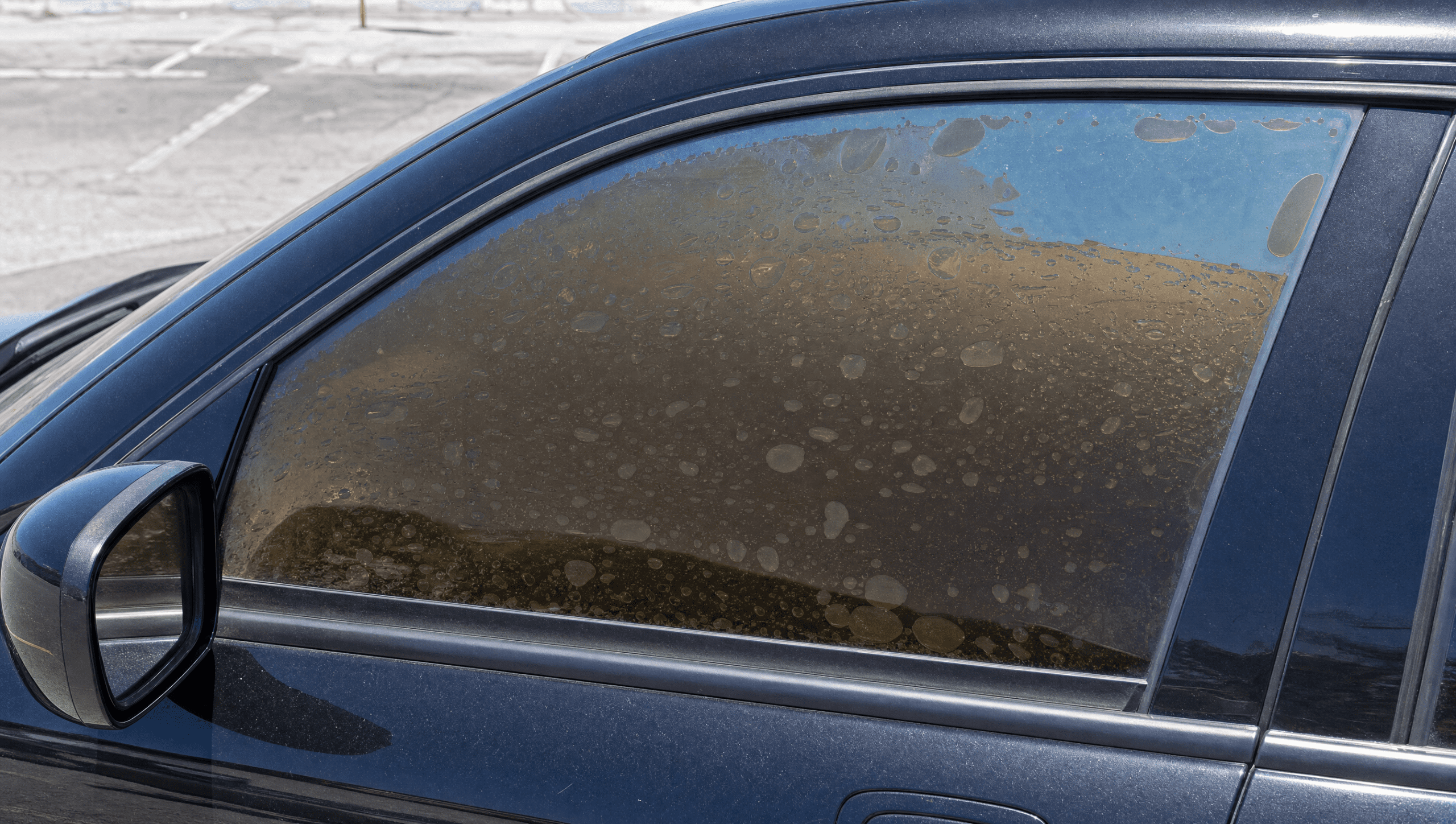
Your customer pulls up. The driver side window has bubbles the size of coins running down the centre. The rear window has turned purple in the corners. The tint that looked perfect when they drove off your lot 14 months ago now looks like a $30 eBay job.
This is the most refundable failure in the window tint business. The customer paid for ceramic tint. They got a ceramic adhesive paired with cheap base film, or they got dyed film masquerading as nano, or they got a metallic film with cheap adhesive that gave up at month 12.
Bubbling, purpling, and peeling are not random. They are adhesive chemistry failures, and the spec sheet tells you which films will fail in 18 months before you ever order. The rest of this article walks through the three specs, and points to the products in our Premium Ceramic Window Tint range at each tier.
Why Window Tint Fails (3 Things That Kill It)
Window tint sits between two enemies. UV light from above, heat from below (window glass at 60°C+ in summer). Most failure modes trace back to one of three chemistry decisions the manufacturer made.
Decision 1, what type of adhesive. There are four common types in the industry.
- Pressure sensitive adhesive (PSA), dry. Applied as a dry layer on the film, activated by squeegee pressure during install. Used in premium ceramic films.
- Clear distortion free (CDF) adhesive. A PSA variant engineered to stay optically clear and not yellow with UV. Premium tier.
- Dyed distortion free (DDF) adhesive. Older PSA technology that uses dye to mask hue shift. The dye is what turns purple after UV exposure.
- Water activated adhesive. Older technology, the installer wets the film and the glass. Cheapest install but the adhesive is the weakest of the four, fails earliest.
Bubbling almost always means the adhesive lost grip. Purpling almost always means DDF dye degraded under UV. Both can be avoided by buying CDF or proper dry PSA from the start.
Decision 2, what blocks the heat.
- Dyed film. Dye absorbs visible light. Cheap, blocks light but does almost nothing for infrared heat. Fades.
- Metallic film. Metal layer reflects heat well but blocks GPS, cell signal, and toll tags. Often required removal on luxury cars.
- Nano ceramic film. Ceramic particles in the film block infrared heat without metal. No signal interference. The premium category.
Decision 3, the IR (infrared) rejection percentage. This is the most misunderstood spec on window tint.
- VLT (visible light transmission). How dark the film looks. Lower VLT means darker.
- IR rejection. How much infrared heat the film blocks. This is what makes a car cooler.
A dyed film at 5% VLT looks dark but rejects almost no IR. A ceramic film at 70% VLT looks nearly clear but rejects 60%+ IR. The two specs are independent. Cheap shops sell VLT and call it “heat rejection.” It is not.

The 3 Specs That Predict a Tint That Lasts
Spec 1, Adhesive Type (CDF or Dry PSA)
Ask the supplier what adhesive the film uses. The honest answers are CDF, dry PSA, or sometimes specific brand names (3M Scotchgard adhesive, for example).
If the answer is “DDF” or “dye-based adhesive,” the film will turn purple within 18 to 36 months in any climate with significant sun.
If the answer is “water adhesive” or “water activated,” the film is using the cheapest install technology. It will bubble within 12 to 24 months.
WRAPMASTER ceramic films use dry PSA with CDF formulation. Stays optically clear for the film’s full lifespan.
Spec 2, Blocker Technology (Nano Ceramic Wins)
The four blocker technologies, ranked.
- Dyed. Lowest. Blocks visible light only. Fades.
- Metallic. Reflects heat well, blocks signal. Reliable but interferes with car electronics.
- Carbon. Carbon particles block IR moderately, no signal interference, won’t fade. Mid tier.
- Nano ceramic. Ceramic particles block IR effectively, no signal interference, no fade, no purpling. Top tier.
WRAPMASTER carries pure nano ceramic (AI series), carbon ceramic blends (CCM series), and metal ceramic (MF series). All three tiers are available in the Premium Ceramic Window Tint range.
Spec 3, Total Solar Energy Rejection (TSER) and IR Rejection
The two real heat performance numbers.
- TSER (Total Solar Energy Rejection). How much of the total sun energy the film blocks. Combines UV, IR, and visible light heat.
- IR Rejection. Specifically how much infrared heat is rejected.
Industry benchmarks.
- Dyed film, TSER under 30%, IR under 20%.
- Carbon film, TSER 35 to 45%, IR 30 to 50%.
- Nano ceramic film, TSER 50 to 70%, IR 60 to 95%.
A spec sheet without TSER and IR rejection numbers is hiding low performance.
Which Tint Product In Our Range For Which Vehicle
Our Premium Ceramic Window Tint category carries 13 products across three blocker technologies and a full VLT range (5% privacy to 70% nearly clear).
Nano Ceramic Series (AI), highest blocker performance, no signal interference
| Product | SKU | VLT | Best for |
|---|---|---|---|
| Nano 70 Ceramic Window Tint | AI7090 | 70% | Windshield heat rejection, nearly clear |
| Nano 30 Ceramic Car Tint | AI3090 | 30% | Front side windows, legal in most regions |
| Nano 20 Ceramic Window Tint | AI2090 | 20% | Standard daily driver darkness |
| Nano 10 Ceramic Window Film | AI1090 | 10% | Rear windows, privacy tier |
Metal Ceramic Series (MF), reflective heat blocker
| Product | SKU | Best for |
|---|---|---|
| Metal Ceramic IR Tint | MF5095 | Maximum IR heat rejection for hot climates |
| Metal 5 Ceramic Tint | MF0895 | Privacy tier with metallic heat reflection |
| Metal Ceramic Film Tint | MF1895 | Mid VLT with metal blocker |
| Ceramic 35 Window Tint | MF3595 | 35% VLT, legal driving tier |
| Nano Metal Clear Ceramic | MF7095 | Nearly clear with metal IR blocker |
Carbon Ceramic Series (CCM), no signal interference, balanced performance
| Product | SKU | Best for |
|---|---|---|
| Carbon Ceramic Car Window Film | CCM1090 | Daily driver carbon ceramic |
| Carbon Ceramic Window Film | CCM2090 | Mid tier privacy and heat rejection |
| Carbon Ceramic Privacy Window Film | CCM2070 | Maximum privacy carbon ceramic |
| Carbon Ceramic Windshield Tint | CCM3090 | Windshield specific tint, clear with IR |
The choice between the three series depends on the application.
- No signal interference required (luxury cars with toll tags, GPS, cellular). Nano ceramic AI series or carbon ceramic CCM series.
- Maximum IR heat rejection (Middle East, Southeast Asia, Arizona). Metal ceramic MF series. Slight signal interference acceptable.
- Balanced performance and price. Carbon ceramic CCM series.
How a Bad Tint Install Goes Wrong (And How To Avoid It)
Even premium ceramic film fails if installed badly. Three rules.
One, clean the glass to dust free. A single dust particle under the film becomes a permanent silver speck. Use IPA, lint free cloth, and finish with a tack rag.
Two, control the room temperature. Adhesives cure best between 18 and 25°C. Cold rooms slow the cure (bubbles trap permanently). Hot rooms speed it too fast (lifting at edges).
Three, do not trim the film against the dot matrix at the top of the glass. The dot matrix prevents the adhesive from bonding fully. Stop the film 3mm short of the dots. This is the single most common install fail.
How Each Customer Pain Maps to a Specific Product
Installer Ivan, dealing with tint bubble callbacks. Switch to dry PSA / CDF adhesive ceramic film. → Any product in the Premium Ceramic Window Tint range, all use dry PSA. Start with Nano 20 AI2090 as the volume default.
Distributor David, stocking a window tint line. Carry the four key VLTs of the AI nano series plus the MF series for hot climate customers. → Nano 70, Nano 30, Nano 20, Nano 10, plus Metal Ceramic IR MF5095.
Enthusiast Emma, wants maximum heat rejection on her Tesla. Nano ceramic, high IR rejection, no signal interference. → Nano 70 AI7090 on the windshield and Nano 20 AI2090 on the side windows.
Fleet Frank, fleet of delivery vans in hot climate. Maximum IR rejection at lowest cost. → Metal Ceramic IR MF5095 across the fleet.
Our Premium Ceramic Window Tint Range
Real specs, full warranty, every SKU on the page.


Frequently Asked Questions
Why does cheap window tint turn purple?
Cheap tint uses DDF (dyed distortion free) adhesive, which contains dyes that degrade under UV light. The dye degradation shows as purple discolouration starting at the edges after 12 to 36 months. Films with CDF or dry PSA adhesive do not turn purple.
What is the difference between ceramic and nano ceramic window tint?
“Ceramic” is the generic category of films using ceramic particles as the IR blocker. “Nano ceramic” specifically refers to films using nanoscale ceramic particles, which block IR more efficiently without affecting visible light clarity. Nano ceramic is the premium subset of ceramic tint.
What VLT is legal for car windows?
Varies by region. In most US states, front side windows must allow 35% or more VLT. Rear windows can be any darkness. In the EU and Australia, front sides typically require 70%+. Always check local regulation before installing.
Why does the windshield need its own special tint?
Windshield tint is usually a near clear film (70%+ VLT) that rejects heat without darkening the windshield. Legal in most jurisdictions because it does not affect visibility. Provides the same heat rejection benefit as darker tints on the side windows.
Does ceramic window tint block 5G or cellular signals?
Nano ceramic and carbon ceramic films do not block 5G or cellular signals, GPS, or toll tag transponders. Only metallic films block signals. Choose AI series (nano ceramic) or CCM series (carbon ceramic) for vehicles with electronic features.
Does WRAPMASTER offer architectural window film?
Yes, separate from automotive. See the Architectural Window Film range for residential and commercial building applications.
Ready to Stop the Bubbling Callbacks?
Browse the full Premium Ceramic Window Tint range, 13 products across nano ceramic, metal ceramic, and carbon ceramic. All dry PSA / CDF adhesive.Free sample swatch of any tint. WhatsApp +86-13626505244 or email dasonchan@tsautop.com. Spec sheet with TSER, IR rejection, and adhesive type on request.